Unlock the secrets to a flawless complexion! Learn what is a good skincare routine for morning and night, featuring the essential steps, product selection tips and expert advice for all skin types.
Introduction: The Foundation of Beautiful Skin
We all desire glowing, healthy skin, but navigating the vast world of cleansers, serums and moisturisers can be overwhelming. The truth is, achieving that radiant complexion isn’t just about expensive products; it’s about consistency and understanding the proper steps. The most common question asked is, “what is a good skincare routine?” The simple answer is one that is tailored to your unique skin type and concerns, yet follows a universal framework of essential steps.
A well-planned skincare routine acts as a shield against environmental damage and a proactive treatment for common issues like acne, dryness or signs of aging. It’s not a quick fix, but a long-term investment in your skin’s health. Taking ten minutes twice a day to care for your skin can have profound, lasting effects on its texture, tone and resilience. Let’s break down the fundamental elements and steps to establish the best ritual for you.
The Morning Answer to What is a Good Skincare Routine
Your morning routine focuses primarily on protecting your skin from the day’s environmental aggressors, such as UV radiation, pollution and free radicals. Think of it as putting on your skin’s armor before you step out the door.
Essential Steps: What is a Good Skincare Routine in the A.M.?
The core morning routine should be simple, effective and always conclude with the most important step of all: sun protection.
-
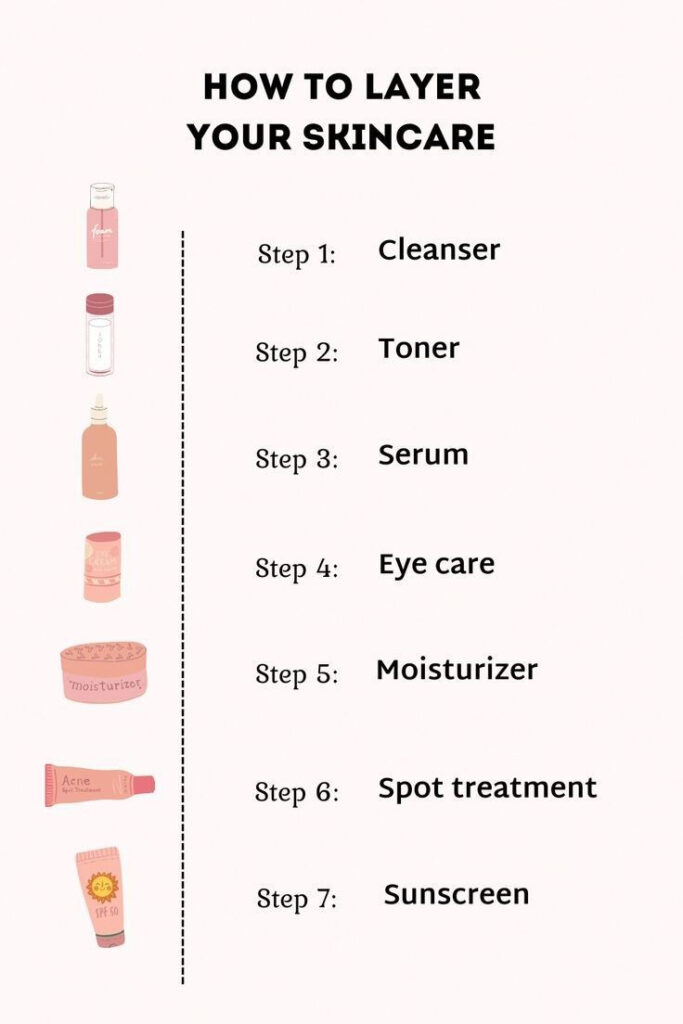
Cleanser (Gentle Wash): Start by gently washing away any sweat, oil or product residue from the night before. Opt for a mild, non-stripping cleanser that respects your skin’s natural barrier.
-
Toner/Treatment (Balancing and Prep): While optional, a toner can help balance your skin’s $\text{pH}$ and prepare it to absorb subsequent products. Choose one that targets a specific concern (e.g., witch hazel for excess oil, rose water for hydration).
-
Serum (Targeted Antioxidant Treatment): This is where you address specific issues. An antioxidant serum, particularly one with Vitamin C, is highly recommended in the morning. It helps neutralise free radicals caused by sun exposure and pollution, dramatically enhancing the effectiveness of your sunscreen and brightening your skin.
-
Moisturiser (Hydration): Even oily skin needs moisture! A lightweight, non-comedogenic formula seals in hydration and fortifies the skin barrier. If your skin is dry, you’ll need a richer, more occlusive cream.
-
Sunscreen (Non-Negotiable): This is the single most important step in any discussion of what is a good skincare routine. Use a broad-spectrum SPF 30 or higher. Apply it liberally (about a nickel-sized dollop for your face and neck) and reapply every two hours if you are spending extended time outdoors.
The Evening Answer to What is a Good Skincare Routine
Your nighttime routine is all about repairing and renewing your skin. While you sleep, your skin works hard to regenerate, making this the best time to apply potent active ingredients that support cell turnover.
Deep Cleanse and Renewal: What is a Good Skincare Routine P.M. Edition?
The evening routine typically involves more steps and more potent ingredients than the morning one, focusing on eliminating the day’s debris and boosting repair.
-
Double Cleansing (Mandatory): If you wear makeup or heavy sunscreen, double cleansing is vital for properly prepping the skin.
-
First Cleanse (Oil-Based): Use an oil cleanser, balm or micellar water to thoroughly dissolve makeup, sunscreen and excess oil.
-
Second Cleanse (Water-Based): Follow up with your standard gentle cleanser to remove any residue and thoroughly clean your pores. This complete removal of debris is a critical step in a truly good skincare routine.
-
-
Exfoliation (2-3 Times a Week): Chemical exfoliants (AHAs/BHAs) are generally preferred over harsh physical scrubs. They gently remove dead skin cells, promoting cell turnover and revealing brighter, smoother skin.
-
Treatment (Active Ingredients): This is the powerhouse step. Ingredients like Retinoids (Vitamin A derivatives) are the gold standard for anti-aging, acne and texture improvement. Niacinamide can help with redness and pore size. Introduce these powerful ingredients slowly to avoid irritation.
-
Eye Cream: The skin around your eyes is significantly thinner and more delicate. A dedicated eye cream can address specific concerns like fine lines, puffiness and dark circles more effectively than a standard face cream.
-
Moisturiser (Seal it In): Use a thicker night cream to help lock in all the active ingredients and support the skin’s barrier function throughout its regeneration cycle overnight.
Customizing and Maintaining What is a Good Skincare Routine
Knowing the basic steps is one thing, but tailoring them to your skin’s specific needs is what makes a routine truly effective.
Product Selection: Getting to the Core of What is a Good Skincare Routine
Selecting the right products is crucial for establishing what is a good skincare routine for your skin type.
-
For Oily or Acne-Prone Skin: Focus on non-comedogenic formulas and active ingredients like Salicylic Acid (BHA) for deep pore cleaning, Benzoyl Peroxide to fight bacteria and Niacinamide to help manage oil production.
-
For Dry or Dehydrated Skin: Your routine should focus heavily on hydration and barrier repair. Seek out powerful humectants like Hyaluronic Acid and emollients like Ceramides, Glycerin and rich Shea Butter to soothe and lock moisture into the skin.
-
For Sensitive Skin: Look for calming and anti-inflammatory ingredients like Centella Asiatica (Cica) and Aloe Vera. Use gentle, fragrance-free cleansers and introduce any new active ingredients very slowly.
-
For Aging or Mature Skin: Focus on powerful renewing agents like Retinoids for boosting collagen production, Peptides for firmness and daily Vitamin C for antioxidant protection and brightness.
Consistency and Patience: The Real Secret to What is a Good Skincare Routine
The single greatest determinant of success is consistency. Don’t fall into the trap of product hopping. Skincare products, especially treatments, can take several weeks or even months to show significant results. Be patient, stick to your routine and pay attention to how your skin responds. If you introduce a new product, do so one at a time to easily identify any potential irritants. This mindful approach is a key part of answering “what is a good skincare routine.”
Frequently Asked Questions (FAQs)
1. How often should I exfoliate and is it a part of what is a good skincare routine?
Answer: Exfoliation is beneficial but must be done in moderation. For most people, 2 to 3 times per week is sufficient when using chemical exfoliants (like AHAs or BHAs). Over-exfoliating can severely damage your skin barrier, leading to irritation, redness and dehydration. If you use a strong Retinoid, you may need to reduce or skip additional exfoliation entirely.
2. At what age should I start focusing on what is a good skincare routine?
Answer: It’s never too early to start caring for your skin. For teenagers, a simple routine focusing on cleansing, light moisturising and daily SPF is a great foundation. However, the use of daily, broad-spectrum SPF is the most crucial anti-aging step that should start as early as possible.
3. Should I apply my products from thickest to thinnest or thinnest to thickest?
Answer: The correct order for product application is generally thinnest consistency to thickest consistency. This ensures that products with smaller molecular structures (like serums) can penetrate the skin effectively before being sealed in by thicker products like moisturiser or oil. The proper sequence is typically: Cleanser – rightarrow – Toner – rightarrow – Serum – rightarrow – Eye Cream – rightarrow – Moisturiser –rightarrow – SPF (A.M.).
4. Can I skip moisturiser if I have oily skin, even as part of a good skincare routine?
Answer: No, you should not skip moisturiser, even with oily skin. Oily skin often becomes dehydrated and skipping moisturiser can trick your skin into producing more oil to compensate for the lack of hydration. The key is to choose a lightweight, oil-free, non-comedogenic gel or lotion to maintain balance without clogging pores.
5. How long does it take to see results from a new skincare routine?
Answer: Patience is essential. While you might feel immediate improvements in hydration, visible results from active ingredients like Retinoids or Vitamin C usually take 6 to 12 weeks of consistent use. Give your new routine a minimum of 3 months before evaluating its effectiveness.
Conclusion
Figuring out what is a good skincare routine is a personal journey that involves understanding your skin and adhering to a consistent schedule. By sticking to the core principles cleansing, targeted treatment and most importantly, daily sun protection you will build a foundation for healthy, resilient and radiantly beautiful skin for years to come. Remember, the best routine is the one you actually do!