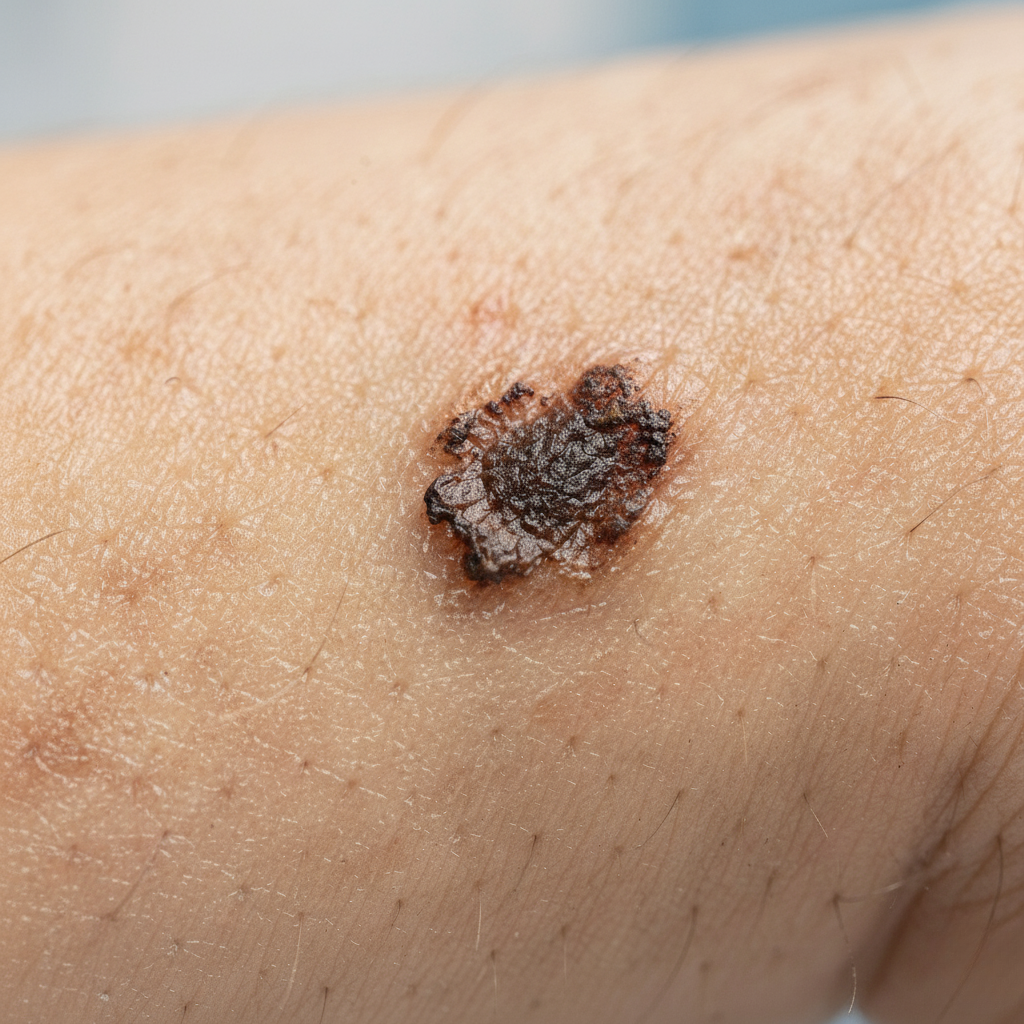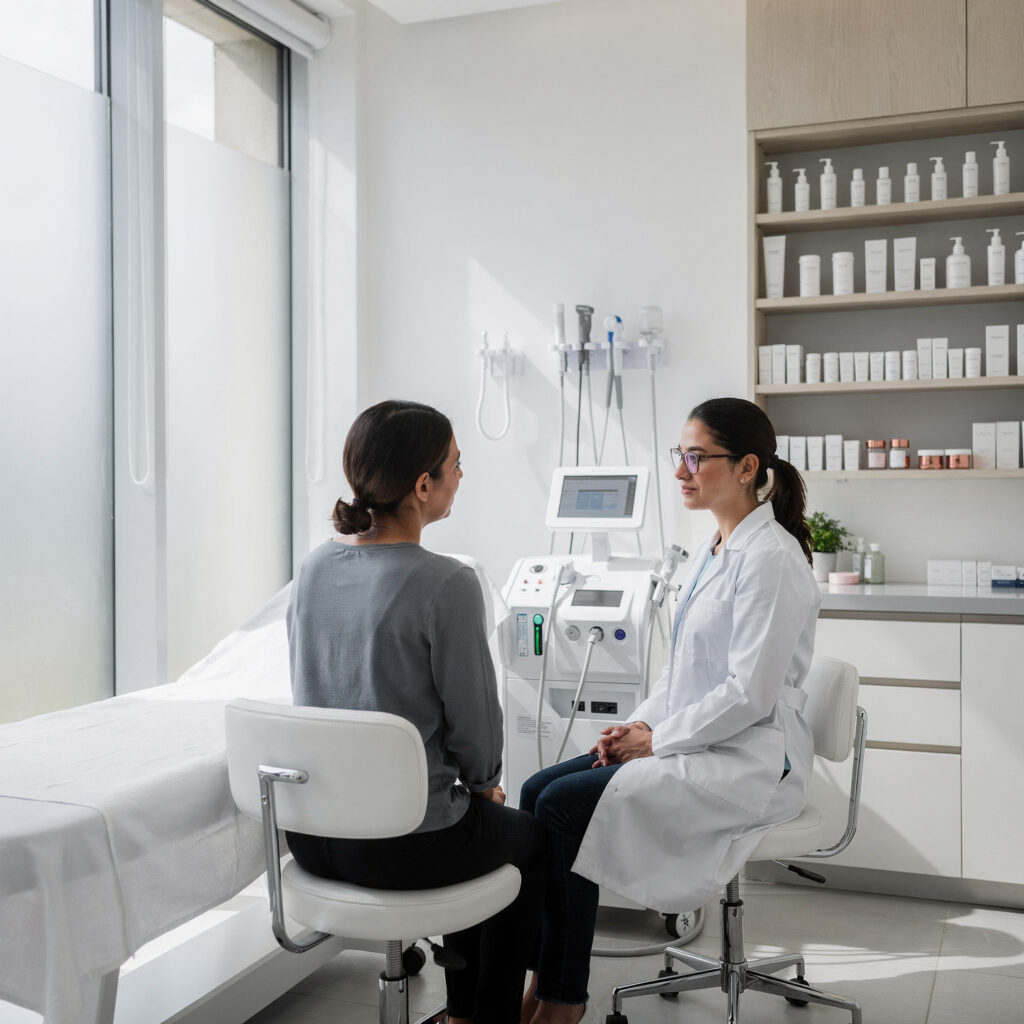
Skin cancer treatment has advanced rapidly in the last decade, transforming prognoses for patients with both non-melanoma skin cancers (NMSC) and the more aggressive melanoma. The chosen course of skin cancer treatment is highly personalized, dependent on the cancer type, stage, location, and the patient’s overall health. While surgical removal remains the cornerstone of care for localized tumors, systemic therapies now offer powerful, targeted options for advanced or metastatic disease.
Surgical Foundations of Skin Cancer Treatment
For early-stage cancers, surgery is often curative. The primary goal is to completely excise the cancerous tissue while maximizing the preservation of surrounding healthy skin.
Precision Techniques in Localized Skin Cancer Treatment
Mohs Micrographic Surgery (MMS): Recognized as the gold standard for high-risk Basal Cell Carcinomas (BCCs) and Squamous Cell Carcinomas (SCCs), particularly those on cosmetically or functionally sensitive areas (face, ears, hands). Mohs surgery involves removing the tumor in thin layers and examining each layer under a microscope immediately. This meticulous process is repeated until all margins are cancer-free, achieving cure rates up to 99% for primary tumors while conserving the maximum amount of healthy tissue. This specialized skin cancer treatment ensures minimal scarring and optimal outcomes.
-
Wide Local Excision (WLE): This standard procedure involves surgically removing the tumor along with a safety margin of normal-looking skin. The width of this margin is determined by the depth and type of cancer (e.g., margins for melanoma are based on Breslow thickness). WLE is the primary surgical skin cancer treatment for most melanomas and is commonly used for larger, lower-risk NMSCs on the trunk or limbs.
Other Excisional Methods
Curettage and Electrodesiccation (C&E): The tumor is scraped away (curettage) and the base is seared with heat (electrodessication) to destroy remaining cells. This is effective for small, superficial BCCs and SCCs.
Cryosurgery (Cryotherapy): Uses liquid nitrogen to freeze and destroy the cancerous tissue. It is generally reserved for very superficial or pre-cancerous lesions (actinic keratoses) and select low-risk BCCs.
Non-Surgical and Localized Skin Cancer Treatment
For superficial tumors, or in cases where surgery is contraindicated due to patient health or tumor location, several non-invasive options offer high cure rates.
Topical and Immune-Boosting Skin Cancer Treatment
-
Topical Therapies: Creams like Fluorouracil (5-FU), a topical chemotherapy, and Imiquimod, an immune response modifier, are applied directly to the skin. They are effective skin cancer treatment options for Actinic Keratoses (pre-cancers) and superficial BCCs, relying on either direct cell killing or local immune activation.
-
Photodynamic Therapy (PDT): A non-invasive approach where a light-sensitizing medication is applied to the lesion, which is then activated by a specific wavelength of light (often blue or red). This generates reactive oxygen species that selectively destroy the cancerous cells. PDT offers excellent cosmetic results for superficial NMSCs.
Radiation Therapy
Radiation uses high-energy rays to destroy cancer cells. It is a valuable skin cancer treatment modality used when:
-
Surgery is not feasible (e.g., a large tumor near the eye).
-
The patient is unable to tolerate surgery.
-
It is used as adjuvant therapy (after surgery) to kill any residual cancer cells in the treated area, particularly for high-risk SCCs.
Systemic Skin Cancer Treatment: Immunotherapy and Targeted Drugs
For advanced skin cancers—especially metastatic melanoma, or NMSCs that have become locally advanced or aggressive—systemic treatments have become the most significant medical breakthroughs, offering hope for long-term survival.
The Immunotherapy Revolution
Immunotherapy works by boosting the patient’s own immune system (T-cells) to recognize and attack cancer cells. These treatments have fundamentally changed the management of advanced disease.
-
Immune Checkpoint Inhibitors (ICIs): These are the cornerstone of modern melanoma skin cancer treatment. Drugs like pembrolizumab (anti-PD-1) and nivolumab (anti-PD-1) block checkpoints that cancer cells use to switch off T-cell activity. By lifting this “brake,” the immune system is unleashed to fight the cancer.
-
Adoptive Cell Therapy (TIL Therapy): A highly specialized approach where Tumor-Infiltrating Lymphocytes (TILs) are harvested from the patient’s tumor, grown in large numbers in a lab, and then infused back into the patient to directly attack the cancer cells.
Targeted Therapies
Targeted therapy uses drugs to interfere with specific molecular pathways that fuel cancer growth, often identified through genetic testing of the tumor.
-
BRAF and MEK Inhibitors: Approximately half of all melanomas harbor a mutation in the BRAF gene. Combination therapy with BRAF inhibitors (like dabrafenib) and MEK inhibitors (like trametinib) has proven highly effective in shrinking tumors and extending survival for patients with this mutation.
-
Hedgehog Pathway Inhibitors: For patients with locally advanced or metastatic BCC that is no longer curable with surgery or radiation, oral drugs like vismodegib and sonidegib target the abnormal Hedgehog signaling pathway, a key driver of this type of skin cancer treatment.
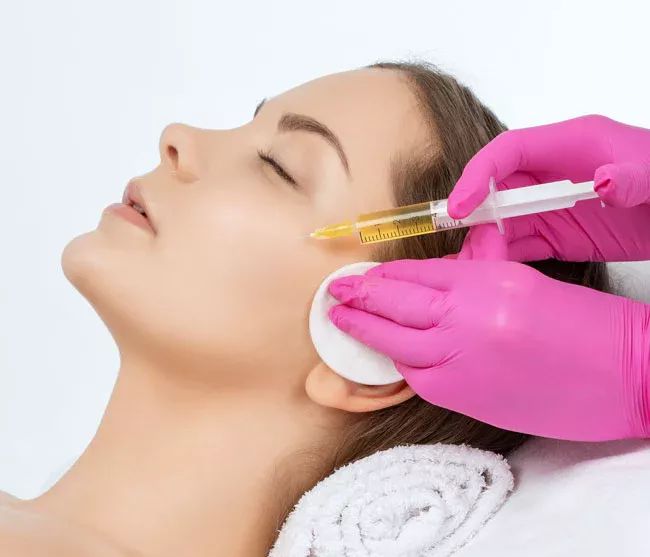
Effective Skin Cancer Treatment Options for Safer Health
Looking Forward: Personalized Skin Cancer Treatment
The future of skin cancer treatment is focused on combining these powerful modalities and tailoring them to individual patient characteristics.
-
Neoadjuvant Therapy: Giving systemic treatment (like ICIs or targeted drugs) before surgery to shrink the tumor and clear microscopic disease, which can improve surgical outcomes.
-
mRNA Vaccines: Research is showing promising results for personalized mRNA vaccines given in combination with ICIs, designed to train the immune system to recognize and attack the patient’s specific tumor antigens.
-
Artificial Intelligence (AI): While not a direct skin cancer treatment, AI is improving the entire pathway by enhancing diagnostic accuracy in image analysis (detecting lesions earlier) and helping physicians predict patient response to various immunotherapies.
Frequently Asked Questions About Skin Cancer Treatment
What are the primary differences in skin cancer treatment between melanoma and non-melanoma skin cancers (NMSC)?
The key difference lies in the systemic approach.
-
NMSC (BCC, SCC): Over 95% of cases are cured with local skin cancer treatment methods like surgery (Mohs) or topical/radiation therapies. Systemic treatment is typically reserved only for advanced, metastatic, or locally incurable tumors (e.g., Hedgehog inhibitors for BCC).
-
Melanoma: While early-stage melanoma is cured with surgery, advanced or high-risk cases rely heavily on systemic skin cancer treatment—specifically, immunotherapy and targeted therapy—to manage or eliminate cancer cells that have spread throughout the body.
Does immunotherapy replace other skin cancer treatment options?
No, immunotherapy is usually an additive or alternative treatment, not a complete replacement.
-
For localized skin cancer, surgery remains the primary curative skin cancer treatment.
-
Immunotherapy (Immune Checkpoint Inhibitors) is most often used for Stage III (adjuvant/neoadjuvant setting) and Stage IV (metastatic) melanoma.
-
It is sometimes combined with targeted therapy or used to consolidate the results of surgery to reduce the risk of cancer recurrence.
What are the most common side effects of modern skin cancer treatment like immunotherapy?
Immunotherapy (ICIs) can cause immune-related adverse events (irAEs) when the activated immune system attacks healthy organs. The most common side effects are usually mild, including:
-
Flu-like symptoms: Fatigue, fever, and chills.
-
Skin problems: Rash and itching.
-
Gastrointestinal issues: Diarrhea or colitis (inflammation of the colon). More serious but less common side effects involve inflammation in organs like the lungs (pneumonitis), liver (hepatitis), or hormone glands (thyroid problems). These severe irAEs require immediate medical attention and are often managed with corticosteroids.
Meta Description
Explore the modern landscape of skin cancer treatment, covering surgical precision like Mohs, non-invasive therapies, and life-changing systemic treatments such as immunotherapy for advanced melanoma. Learn about personalized options.